
With conflict escalating in the Middle East Gulf, the crucial Strait of Hormuz has effectively shut down, immediately halting the transit of oil and casting deep uncertainty over the fate of roughly 16 million barrels per day (bpd) of crude exports from the region.
As flows through this vital chokepoint grind to a standstill, the global energy market is now scrambling to understand what alternative export routes are available and how quickly they can absorb this massive disruption.
“Even if flows through the Strait of Hormuz start to resume, it will take time for upstream production to ramp up,” Warren Patterson, head of commodities strategy at ING Group, said.
“The combination of these production shut-ins and no signs of de-escalation in the war means the market is having to aggressively price in a prolonged supply disruption.”
Oil prices breached the $100-per-barrel mark on Monday for the first time since August 2022, and shot up towards $120 per barrel.
However, prices had pared some of the gains later in the day.
Market disruption and immediate production cuts
Gulf producers have to cut production due to limited storage capacity (measured in days, not months) and insufficient alternative export routes for total crude volumes, according to a Rystad Energy update.
The key uncertainty is not if, but when, these cuts will happen.
Since the conflict began, Iraq, Kuwait have and the United Arab Emirates have already commenced with production cuts.
Reports also suggested that Saudi Arabia, the biggest oil exporter in the world, have also scaled back production as its storage tanks fill up.
“A partial relief valve exists in the form of the pipeline from Kirkuk in the country’s northern Kurdistan region, which can move up to 0.5 million bpd northward to Ceyhan on Turkiye’s Mediterranean coast – but this pipe is currently stopped, offering no immediate reprieve,” Rystad Energy said.
Saudi Arabia’s Yanbu pipeline
Saudi Arabia’s crude exports can be rerouted from the Middle East Gulf to the Red Sea port of Yanbu using the East-West pipeline, which is theoretically capable of moving around 7 million bpd of crude towards the Red Sea, according to Vortexa’s analysis.
Loadings from Yanbu have historically been significantly lower, with February 2026 loadings at approximately 1.4 million bpd.
The Yanbu pipeline is crucial, as it supplies crude to three refineries located in Yanbu: the Saudi Aramco Mobil Refinery (SAMREF, 400,000 bpd), the Yanbu Aramco Sinopec Refining Company (YSREF, 400,000 bpd), and the Aramco Yanbu Refinery (240,000 bpd).
Together, these refineries account for about 1 million bpd of the pipeline’s total capacity.
“Then there’s also the question about how much the terminals at Yanbu can load, with some estimates putting this capacity at ~3mbd,” Rohit Rathod, senior oil market analyst at Vortexa, said in a report.
Approximately 40% of the crude oil currently loaded at Yanbu is consumed domestically within Saudi Arabia.
However, considering the current market conditions, this volume could readily be diverted to the export market, according to Vortexa.
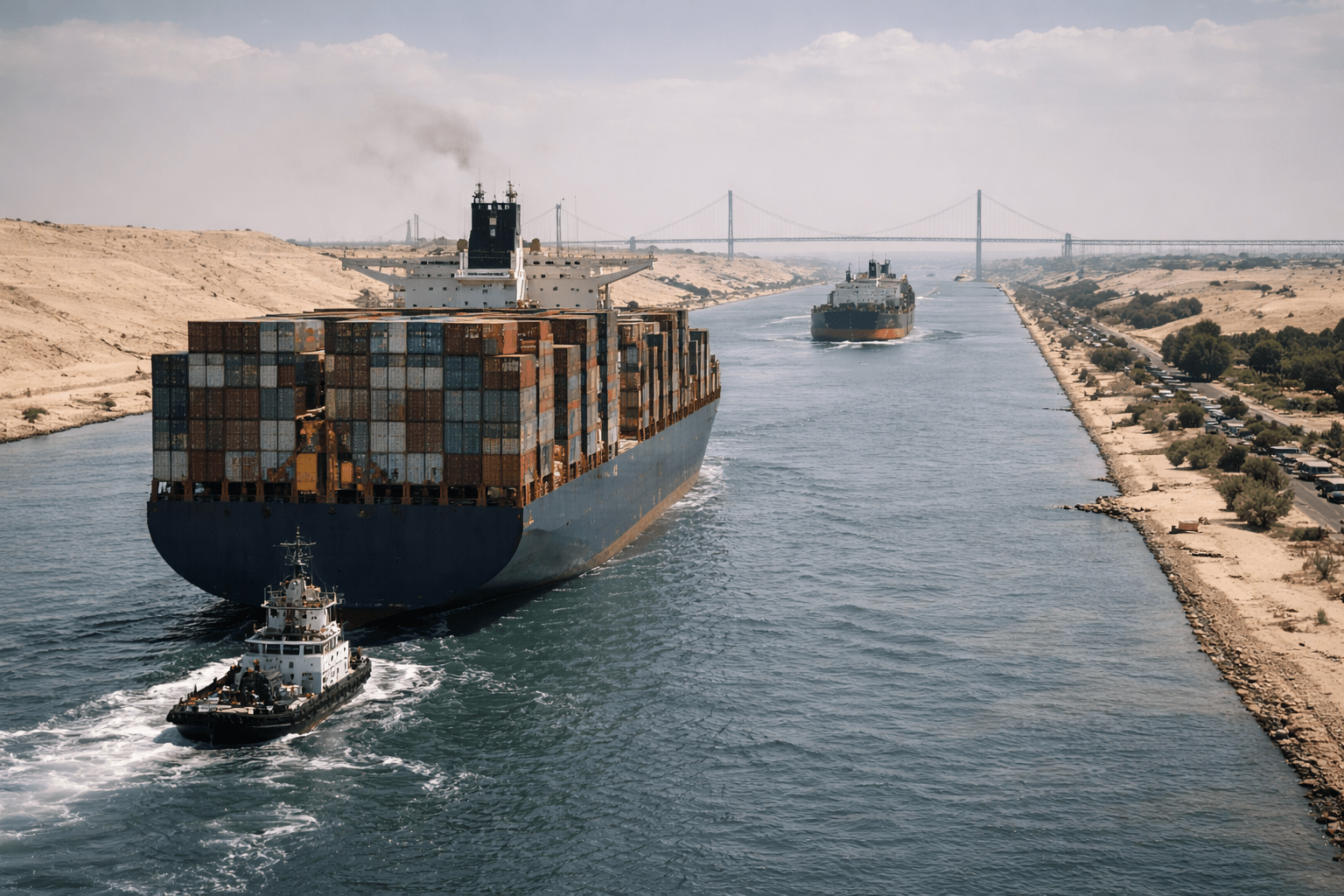
Realistically, this alternative shipping route primarily benefits buyers in Europe and North America, utilising either the Suez Canal or the Sumed pipeline.
Yanbu has maintained an average loading rate of 2.5–3.0 million bpd since the beginning of March, utilising the existing fleet of VLCCs and Aframax oil tankers in the port’s vicinity, according to Rystad Energy.
It is important to note that the terminal’s demonstrated peak load rate of 4.8 million bpd was an isolated event.
This spike was a result of the unusually high concentration of large vessels available during the initial days of the crisis.
“It is not clear if this can be sustained over a prolonged period,” Aditya Saraswat, head of MENA research at Rystad Energy, said in an emailed commentary.
UAE’s Fujairah alternative and supply vulnerability
While the UAE possesses a partial safeguard, it remains vulnerable.
The Abu Dhabi Crude Oil Pipeline (ADCOP) offers a genuine operational alternative, capable of transporting 1.8 million bpd to the Fujairah terminal on the Gulf of Oman, thereby completely bypassing the Strait of Hormuz, Rystad Energy’s research showed.
Of the UAE’s total exports, approximately 3.3 million bpd can bypass the Strait of Hormuz, covering just over half of its normal outflows, the Norway-based energy intelligence company said.
Consequently, a significant volume—1.5 million bpd, or about 31% of the UAE’s total exports—remains reliant on the passage through Hormuz.
Loadings from Fujairah have been consistently high, averaging around 1.1 million barrels per day (mbd) in 2025 and remaining above the 1 mbd mark in 2026 to date.
“Given that the 100kbd Vitol FRCL refinery in Fujairah is also served by this pipeline, the actual capacity to ramp up loadings out of Fujairah remains limited,” Vortexa’s Rathod said.
The pipeline, along with the port of Fujairah and its storage facilities, is located near the strait and has recently been targeted by drones.
This has led to storage operators halting operations and a noticeable reduction in loadings from Fujairah.
“We have already observed a tanker load partially before moving out, as storage facilities were attacked and if operations remain suspended for longer, Fujairah no longer remains a viable alternative,” Rathod added.
Vortexa believes that there was still uncertainty around how long the conflict would continue, but expects flows to redirect and increased crude exports out of Yanbu as well as Fujairah to a small extent as buyers tried to secure barrels.
“What remains to be seen is the impact this will have on vessel tonne-miles in a scenario where vessels heading to Asia from Yanbu will have to go through the Suez Canal and around the Cape of Good Hope (due to the Houthi threat) with already high freight rates,” Rathod said.
The post Analysis: Can Gulf oil find new routes if Hormuz remains shut? appeared first on Invezz